
Alopecia Areata: Why Patchy Hair Loss Should Be Evaluated Early
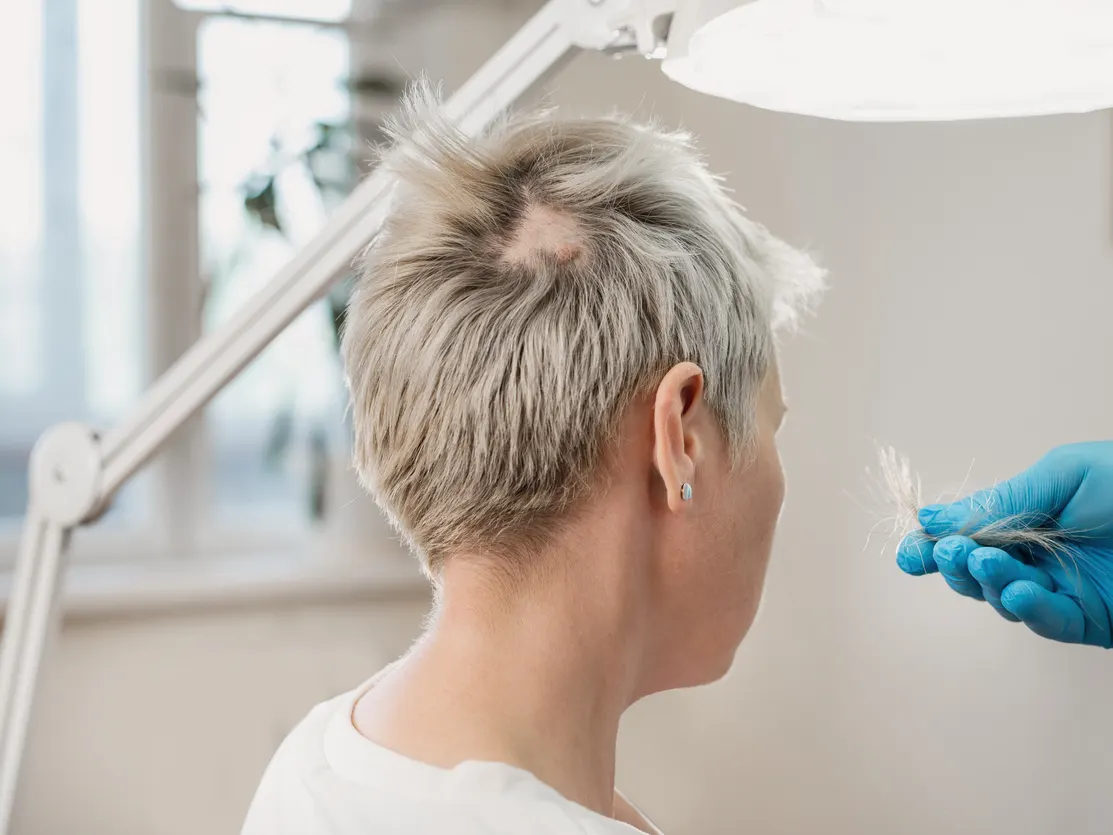
Finding a smooth bald spot can be unsettling, especially when the surrounding scalp appears healthy. Unlike routine shedding, which usually causes more general thinning, alopecia areata often begins as one or more distinct round or oval areas. At Dermatology Specialists of Dallas, in Dallas, Texas, care is led by Brigitte Sallee, MD, a double board-certified dermatologist and Mohs micrographic surgeon with published dermatology research experience.
What Alopecia Areata Can Look Like
Alopecia areata is an autoimmune condition in which the immune system affects the hair follicles. The first sign is often a bare area that feels smooth and shows little redness or scaling.
Although the scalp is frequently involved, the condition can also affect the beard, eyebrows, eyelashes, or other areas where hair grows. Some people notice itching, tingling, or burning before strands begin to fall out.
Nail changes can appear alongside alopecia areata. Small dents, ridges, roughness, or brittleness may help a dermatologist recognize the broader pattern.
Why a New Bald Area Should Be Examined
A smooth spot does not confirm alopecia areata by itself. Fungal infections, inflammatory scalp disorders, pulling or tension, and other forms of thinning can produce similar changes. Identifying the underlying condition matters because each one calls for a different approach.
During a medical dermatology evaluation, our team may examine your scalp, skin, and nails and ask about when the change began. Your health history, family history, recent illnesses, medications, and hair-care habits can also provide useful context. A dermatoscope may be used for a closer view, while bloodwork or a biopsy is reserved for cases in which the diagnosis remains uncertain.
An early visit creates a baseline for tracking whether the affected area stays the same, widens, or develops elsewhere. It also allows photographs or measurements to document changes that may be difficult to judge at home.
Treatment Depends on the Extent of Hair Loss
Alopecia areata does not follow the same course for every person. Hair sometimes returns without treatment, but regrowth may be followed by another episode of loss. Recommendations depend on the number and location of the bald areas, how long they have been present, the patient’s age, and whether the condition is progressing.
Our practice also offers PRP hair loss treatments for certain types of thinning. Because PRP is not automatically appropriate for alopecia areata, the diagnosis should come before deciding whether this service or another form of care is relevant.
Dermatology Specialists of Dallas is also connected with an affiliated clinical research center involved in dermatologic studies. Research participation and treatment availability vary, and patients should not assume that an alopecia areata trial is currently open.
When to Request an Appointment
Consider having the area checked when you notice:
- A new smooth bald spot
- Several round areas of missing hair
- Loss involving the beard, brows, or lashes
- Changes in your nails
- A bare area that is widening
- Repeated cycles of regrowth and shedding
Having an unexplained bald area examined can help you avoid spending time on shampoos, supplements, or home remedies that do not match the condition. Dallas, TX, patients can contact us or call 214-828-0016 to request an appointment with Dermatology Specialists of Dallas.
GET IN TOUCH
Contact Us Today
-
Dermatology Specialists of Dallas
3600 Gaston Ave, Barnett Tower, Suite 901, Dallas, TX 75246Mon - Fri: 8:00am - 4:30pm
Book Now at Dermatology Specialists of Dallas
Weekends: Closed
The form is loading. If it does not appear, call 214-828-0016.